
A confusing post-script
Judge issues pre-trial legal aid plea after mother left alone
The article refers to this judgment of DJ Keating: London Borough of Sutton v A mother & Anor [2025] EWFC 147 (B) (bonus points to the Gazette for linking to it). The judgment is a final decision in care proceedings, and the first 97 paragraphs are the main decision and conclusion (the child was to remain living with extended family due to deficiencies in the mother’s parenting). The article isn’t about those, but is about the last 3 paragraphs, appearing under the heading ‘other matters’. They are so short I’ll repeat them in full:I’m really confused by this. By what it’s trying to do and by what it is trying to describe. Two conferences with counsel is the standard allowance per case and it is difficult and usually futile in my experience to try and get the LAA to pay for more. But conferences at court don’t count as conferences at all, and can’t be claimed as such. They are just part of the court day, which may or may not be captured in the fee paid by virtue of the parties being ordered to attend early for such a discussion. So having two conferences at court shouldn’t exhaust the 2 conference allowance. [Important correction, this rule only applies to final hearings – thank you to Jacob Gifford-Head for correcting me – see 7.140-7.141 here]. The mother had an intermediary. Maybe the problem was getting funding for a meeting with the intermediary outside court – but if so I’m not sure why the 2 conference rule would apply. And there is nothing in the judge’s wording that suggests the problem is with payment for an intermediary. Nor is there any reference to the recent case of Re M (Intermediaries) in which the Court of Appeal made clear that conferences away from the court might legitimately be supported by an intermediary, but on a case by case basis, and upon application to the court(rather than simply the LAA as appears to have happened here).Other matters
98. I was told that M did not have the benefit of a conference with counsel to help prepare for what was a 4 day long contested final hearing. I am told that was because her lawyers had asked the legal aid agency to pay for 3 conferences, two of which took place at Court at an early stage of the proceedings, and a third when the local authority changed its care plan, a further conference could not be arranged without prior authority from the legal aid agency. I do not know why that authority was not sought. Having that proper ability to discuss the case would have made the process easier for M, who is a vulnerable person. M told me that she had not seen the letters sent by GM and by G & H in August 2024, which were in my bundle, and so she had to be given time when in the witness box to read them. That must have been hard for her. She did not ask for a break at those times, and nor did her barrister or intermediary, and I was watching carefully for a clue that she might need one. I am worried that the absence of a conference with her advocate, has not helped M prepare for the trial as well as she might have done. 99. To the extent that it assists lawyers, I believe that a parent who is contesting a care order application and seeking the return of a child to their care at a multi-day hearing normally should be afforded the opportunity to meet in conference with their trial advocate after the evidence is complete and before the trial begins. I hope that the legal aid agency would be willing to consider applications for authority for such a conference. Where a parent is a vulnerable witness, that has all the more force, in my view. 100. I propose to publish an anonymised version of this judgment. Before doing so I will invite counsel to comment on a draft version to ensure that there is no risk that Rosie or her family can be identified.
“… the experience of a vulnerable person in a solicitor’s office, where matters can proceed at their own pace, is likely to be different from their experience of a more formal courtroom setting, and what is necessary in one setting may be unnecessary in the other”Next, let’s suppose that for good or bad reasons no conference with counsel could be arranged [update – as per correction above this seems more likely to be applicable due to exhaustion of the 2 conferences] – isn’t it still the solicitor’s job to make sure that the client has been taken through or told about relevant materials, in a manner consistent with their ability and vulnerability? (that’s rhetorical, it is absolutely their job). That task doesn’t actually require counsel at all, though it is sometimes desirable to involve trial counsel for the purposes of clarifying instructions and agreeing an appropriate approach to the trial. In any event, the brutal reality is that counsel are ofteninstructed too late to allow for a conference because there is no available slot in the diary to accommodate it, or because the papers come too late for it to be meaningful – or are told all the conferences have been claimed by earlier counsel and even if there is time for a conference we are often expected to do another for free (which we often do in order to ensure we are able to give our best at court). One of the reasons we often do them for free, incidentally, is because the fee is so insultingly low (this is about £125 gross for many hours of work, in real terms that probably nets down to about £50-60 – I’m not talking about KCs like me, but junior rates) that conferences are as good as unpaid anyway, and because most of us are conscientious enough to want to do a good job at trial and will do what we need to do to make that happen. Of course, it is also possible that these documents were gone through with the mother but she didn’t remember. But the point is, whatever the judge is describing and trying (it seems) to flag as a problem may not actually be a problem at all. Or may not be the problem s/he thinks and suggests it is. Which rather begs the question why anything was said at all. Either it is relevant to the fairness of the process (in which case one might have expected to see it in the main judgment with some reassurance that in-trial adjustments ensured fairness – or it serves some other purpose. What that purpose was and whether it is achieved or not is somewhat unclear. The Gazette call it a ‘legal aid plea’ but a judgment from a DJ with such limited explanation of the perceived issue is not going to influence the legal aid agency, who I’m not sure even have any discretion to authorise extra conferences save in events or VHCC cases. I don’t disagree that counsel should if possible have a conference with their client before a contested final hearing, and they should be paid to do so, but this plea is extremely unlikely to advance that cause. The case itself is a sad one, and neatly summed up by the summary provided at the start of the judgment, something that is becoming more common, as is the use of a pseudonym:
SummaryIt’s a shame really that the coverage of the case focused on the Judge’s ‘legal aid plea’ without more than a passing mention of the child at the heart of the case, or the facts and evidence discussed in the judgment, and without flagging that this is a welcome published judgment from district judge level, which is written in an accessible style. This type of reporting is typical of the sort of journalism we used to see before the transparency reforms, much of which was based upon the extraction of a single line of a judgment which was then inflated into a standalone story, which often bore little resemblance to the judgment as a whole. There is nothing wrong or inaccurate in this report, which is written by a well respected journalist, but other than adding a short quote from the MOJ the article doesn’t attempt to interrogate what was going on here or whether the ‘plea’ paragraphs actually make any sense. Now that we are used to more detailed and penetrating reporting about the family courts, something that has been made possible through changes that have facilitated reporters to attend hearings and scrutinise both the process and the facts, this sort of reporting stands out even more. That said, if the report hadn’t been written I might not have spotted the judgment at all.Rosie, who is 9, is a lucky girl, because her mother, M and M’s family all love her very much indeed.
I have carefully read and listened to all of the evidence before me. I agree with Social Services that Rosie has suffered significant emotional harm and impaired social and intellectual development which is due to the care that she received from M before the Court case began. I do not believe that M intended to cause any harm to Rosie.
I have also decided that it is in Rosie’s best interests that she should continue to live with her aunt, G, and G’s husband, H. Everyone agrees that they have done a good job caring for Rosie since last July, and that if Rosie wasn’t going to live with M, that is the best outcome.
I have decided that Rosie should be made the subject of a care order.
I agree with Social Services’ care plan, which includes regular and important contact arrangements so that M will be involved in Rosie’s life.
I do not see that any form of contact order is needed.
The micro-politics of email
Grrrrr, but it's impossible. One thing I don't need on top of all my work stress is feeling guilty for contributing to your work stress because I sent you an email at the wrong time. These rules about when the sending of emails is forbidden are well intended but, I have concluded, counter productive. Mea culpa - I have been inconsistent both in my views on these things, and in my application of my own self-set rules and those notionally imposed upon us. No doubt I will continue to be so. I am at least consistent in my inconsistency. [Post-script - I wrote this post a coupla weeks ago. I have indeed continued to be consistently inconsistent, and have been happily sending emails all weekend because, well, no I'm not going to pretend I somehow managed to read that brief or do that short notice task in the working week when that is OBVIOUSLY not possible. Pretending I have some magical ability to be at court all the normal working hours AND absorb new briefs simultaneously or whilst I...
I stayed up till midnight – can I have a snooze now?
The interminable wait is over. I suppose that means it wasn't, ultimately interminable. But it was quite long. And the embargo has just expired, so... BUT. That's ok because Sir A, the big A, Andy the Great, El Pres etc etc - has come up with the goods. I am so super pleased I don't know what to say. Also, I already said it on the Transparency Project blog. And now I have to go to bed and get some beauty sleep because apparently I might be doing an interview about it tomorrow and my mother will notice if I have bags under my eyes on the telly. She probably won't notice if my words come out in the wrong order through lack of sleep, but that is a risk if I don't get some shut eye right now. Happy reading. Here it is (or a post about it anyway, the web team at Judiciary have clear had an early bath and are going to put it up in the morning) : Seeing invisible elephants – the transparency review is published
I’d like to write a blog post but I don’t have the time…
Things are busy here. I don't have time to say anything terribly considered or even very interesting, but I just place this marker down that the workloads for all of us are not reducing (judges, lawyers, social workers, court staff...), and things are really tough out there. 9am hearings, lunchtime hearings, 4pm or even 4.30pm hearings - even in non urgent cases - are becoming normalised in the family court. This should not be happening. I challenge it when I can - for my own sake and that of colleagues - but our commitment to our clients and our cases sometimes makes this a hard line to hold. I do not pretend that I have not agreed on occasion, in particular cases. I'm not a militant or a purist, but I am really worried. I know judges only started doing this out of necessity themselves, but I can feel us sliding ever faster down a very slippery slope, and my digging my heels in is no longer enough to counter the momentum that has begun to gather. 8am starts, 6pm finishes even on a...
Stumbling across a paradigm case – the hardest legal blogging expedition so far…
I have been working for quite a little while now on a series of four blog posts which I published on the Transparency Project blog on Sunday. The posts deal with a final hearing in private law proceedings which I observed, and my working methods and observations on what I saw (and read). You can read the posts here.

May the Fourth be with you (soon)…
I have finally begun updating The Family Court without a Lawyer. Since its been four years since the last edition, preparation of this fourth edition is a somewhat chunkier task than was the third. The reason for the gap between editions is threefold : in the beginning there wasn't much need, but subsequently there has been a sort of repetitive cycle of me not having the time and energy and there being some major piece of law reform tantalisingly poised on the horizon, so 'we might as well just wait for that before wasting time updating'. A few of those have turned out to be mirages, but we are now approaching the watering hole and it looks reasonably certain, that come the spring there will be two major new pieces of law actually in force, changing the landscape in ways that really do require a rewrite. Those are The Divorce, Dissolution Act 2020 (which introduces no fault divorce) and The Domestic Abuse Act 2021 (which, amongst other things, will prohibit direct questioning of one...
About this blog
“Pink Tape” isn’t just about family law. I post about topics that interest me, which mostly revolve around family law, but also include non-legal family-related topics as well as unrelated subjects. I hope this blog will convince at least one person that not all of us in the legal profession are money-hungry sharks. Some of us are actually quite nice. Additionally, I aim to provide useful information about family law for those working in the field without being too heavy or boring.
The primary goal of the blog is to improve the quality of public information and discussions about legal issues.
I understand that not everyone is a fan of “Pink Tape” or family lawyers in general.
latest
Blog Posts
You’ve been quiet lately
Yes. Yes I have been very quiet. I was going to break my silence with a proper blog, but I'm nodding off into my laptop, and have 3% battery left (the laptop not me). I've been off work for a week (bar one sneaky hearing on Thursday) and it has been lovely. Cleaning...

GDP-ARgggghhhh! (The Legal Aid Agency’s guide to the GDPR)
I know. A blog post in which the twin joys of legal aid and GDPR are combined in one glorious cluster of hideousness. I'm sorry. Two parallel universes collide and rip a hole in the fabric of reality, or at any rate in the carefully drawn timetable set by the judge....
Big Transparency News Folks!
In haste - see here a short post I've written on The Transparency Project blog explaining the big new developments on the transparency in family courts front : A Major Transparency Announcement from the Top Family Judge I'm running a workshop on this next Weds. We'll...
Police Disclosure into Family Court cases – including sometimes phone and device downloads
Update May 2025: This is an old post, and whilst much of it remains valid I have recently made a correction to some things I said in it, to make sure that the post is not misleading. You can read that here:...
Harnessing transparency in the family courts as a power for good?
On 27 September Louise Tickle and I will be running a training day for Resolution : Harnessing transparency in the family courts as a power for good? A specialist professional development day for family law professionals examining the dilemmas and benefits of more...

A post script about RIPA
A short while ago I wrote a post about social workers carrying out surveillance of families that they work with, which has attracted a certain amount of attention. You can read that post here : Social work spies? (Yes, you over there I'm talking to you...). I've had...
Videos of children being removed
Every so often a video is circulated on Facebook or Twitter that shows the distressing removal of a child from its parents by police or social workers. Yesterday was one such day. The video in question came with no context to speak of, though it was clear the mother...
Social work spies? (Yes, you over there I’m talking to you…)
I've had this post on my 'to do list' for some time, but have finally been nudged into action by coverage this week of some research on the topic in the Times : Social workers ‘spying’ on families through Facebook (sorry, paywall). That says that 'Social workers are...
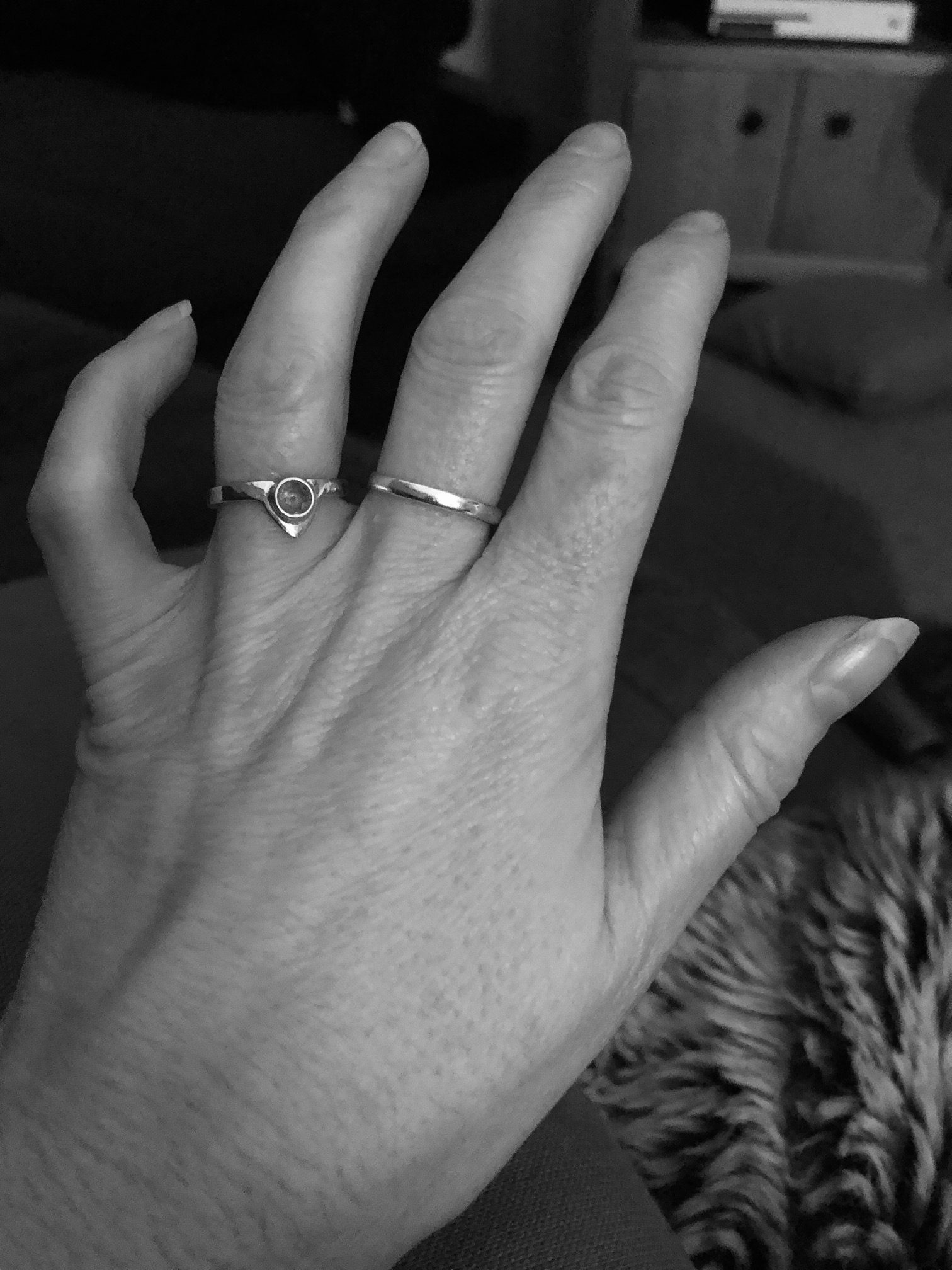
My grandmother’s hands
Every time I look down I see my grandmother's hands. Every time I look down (click clack on the keyboard) I see my grandmother's hands... Knuckles that kneaded pastry for pies, palms that rolled dumplings for stew. Fingers that stitched and mended. Hands that taught...
Rules of the blog
Anonymized or fictional
All the information on this blog is anonymized or fictional to avoid causing any trouble for anyone, including myself. I have modified details to prevent the identification of specific cases.
Comments
I won’t approve comments that, in my judgment, breach privacy laws related to family matters. Unless individuals have been identified in a published judgment, I won’t disclose their involvement in any proceedings.
Nothing Defamatory
I will not post anything that I believe could be considered defamatory. Due to time constraints, I can’t fact-check every statement in a comment. Therefore, I must be cautious to prevent potential legal issues or threatening letters. If you’re certain that a comment is not defamatory, you can publish it elsewhere at your own risk.
NOT Legal Advice
The content of this blog is not intended to constitute legal advice, so please don’t interpret it as such. It may seem relevant to your situation, but it likely isn’t. I cannot be held responsible for any reliance you place on its contents.
Accuracy
The information on the blog is as accurate and up to date as possible, considering my other commitments. Pink Tape is a hobby that I work on when time allows. Therefore, I can’t cover all legal changes or update information that becomes outdated.
External Links
I cannot be held responsible for the content of external sites linked from this blog, in terms of their accuracy or the opinions expressed on them
Moderation
I’ve implemented comment moderation on this blog to filter out comments that are repeatedly negative or offensive about lawyers. Rest assured, I won’t block sensible contributions, even if they disagree with me. I will strive to moderate promptly, but occasionally a comment may get lost in spam.
Right of Reply
If a post contains an inaccuracy about you and you’d like it corrected, feel free to comment for a right of reply. Please respect that the content on this blog is my intellectual property, and ask for permission before reposting. If you have any topics or blog post suggestions, feel free to email me at familoo@pinktape.co.uk.
Copyright
All material on this site is copyright of Lucy Reed. Please do not reproduce without permission.